A bird with unique plumage is exciting to see, but how Rare is an albino or leucistic robin? Our experts share information about the White Robin. Albino and Leucistic Robins Bird Rare? Not So Uncommon.

Leucistic American Robin
White Robins: Leucistic or Albino?
Leucistic American Robin
There are some special ways to recognize this American robin bird. White patches are seen on the body of such birds. This is one way to recognize leucistic robins.
A white American Robin bird appeared before me for 3 years. How rare is this bird and is it the same bird you think the robin looks like? – says Birds and Blooms reader Susan Jacobsen of New Berlin, Wisconsin.
Ken and Kimberly Kaufman: For some reason, robin birds lack certain pigments in their feathers—called leucism or albinism—
Robins are more common than most other birds according to Gobpashana. But these birds are still rare. It is estimated to affect about one in 30,000 robins. So instead of two different birds that look like robins, you can see one bird twice.
Robins are generally faithful to their particular location. They may return to the same place during winter, summer and migration. So it can be assumed that you can see the robin bird again.
See photos of white cardinals and other leucistic birds.
Albino Robin White Robin Leucistic Robin
These types of robins are mostly white in color but are not albino birds.
“Is this American robin leucistic?” asks Candy Brass of Grand Rapids, Michigan.
Ken and Kimberly: Yes, this is a good example of the effect of leucism on a bird’s plumage. This robin is not a true albino bird, as it has black eye color, a bright yellow bill, and parts of its feathers that are typically gray and orange in color. But its plumage lacks most of the pigment, which makes it a more attractive mostly white bird.
Leucism is a regular sight in American robins, but it’s a rare thing and a special experience any time you see it.
Are albino and leucistic robins actually rare? What You Are Actually Seeing
If you’ve seen a robin that is almost white or patchy as if it’s been bleached in a few spots you’re not imagining things. You’re not hallucinating. They exist and they are extremely rare. But “rare” needs a bit more nuance than that, because most people are confusing two extraordinarily different conditions. These are albinism and leucism. Though they may appear similar at first, they’re not the same thing and understanding the difference matters if you want to know what you’re looking at.
What is a Robin with Leucism?
A genetic condition has been known as leucism whose occurrence reduces pigmentation. However, this condition doesn’t have an occurrence in the eye pigment cells. The most important difference is the latter. A leucistic robin has extensive white or washed-out patches in its plumage but has dark eyes. The bill might still have colour. Some sections of the body may appear completely normal while others are pale or white.
Of the two, this is the condition that is most frequently seen. You may see birds that have white wing patches on a body that looks quite normal, but the breast is a pale or faded orange-red instead of brick, or with a head-to-tail coat of pure white but with black eyes and a yellow bill. People struggle the most with the last one. From a distance, a fully leucitic robin looks white and it is easy to guess albino. But observe the eyes. If a creature has dark eyes, it has leucism and not albinism.
What’s a True Albino Robin?
An actual albino robin has no melanin. Not reduced absent. This leads to an entirely white bird, characterized by pink or red eyes. The blood vessels within the unpigmented iris lead to the pink hue.
In fact, true albinism is rare in wild birds because it is really disadvantageous. The role of melanin is not only to color the feathers but also to strengthen their structure. Albino birds posses fragile feathers that wear out more quickly. When the conditions of light are bright, their light-sensitive eyes affect their vision ability. Considering how easily predators can spot a bright white bird, it’s clear why albino robins often don’t persist for long in the wild.
If you feel you’ve witnessed a true albino robin, it is possible. Nevertheless, you are more likely to have seen a leucistic one.
How infrequent they are?
According to the most popular estimate, the occurrence of leucism in American robins is about 1 in 30,000. It’s rare enough to be an event when you see one, but not so rare that you never hear of one. Birders who are out in the field will, on occasion, bump into them. Some are even lucky enough to spot the same individual bird repeatedly over the course of a few years.
This is an important point, robins are very faithful to territory. The same bird often comes back each spring, summer, and even winter to the same yard or woodland. So if you see a robin that is patchy or white this year, there’s a real chance it comes back. Martha Chavez stated that she had seen the same partly leucistic robin last fall and then again in March of the following year it must have over-wintered in the area and returned.
Albino robins are less common. Due to survival challenges sightings are brief and rare.
How can you identify these species in the field
**Eyes** – a swift verification. Pink or red eyes indicate albino. Leucistic condition indicated by dark eyes.
Albino robins possess a pale often pinkish colored bill. Leucistic robins tend to retain some yellow-orange bill coloration.
Albinos are completely white in the whole body. Many leucistic birds are patchy; the odd white wing or white head or white streaking on an otherwise normal breast.
The legs of albino birds are usually pale or pink. Leucistic birds usually have normal coloured legs.
Both species of warblers behave just like ordinary robins. The Coloration Is Purely Genetic
What causes this to happen?
A genetic mutation is considered to be responsible for both of these conditions. Leucism inhibits the migration of pigmented cells from their place of origin (the neural crest) to the skin and feathers. Melanin fails to reach the feather follicles or is not produced correctly, while it does reach the eyes, causing them to remain dark.
Albinism is unique. A mutation of the genes controlling the enzyme tyrosinase results in albino skin on the entire body. Without functional tyrosinase, there is no melanin anywhere at all, including the eyes.
Both these conditions are heritable, but it does not surely pass from parent to offspring. Normal-looking parents may both carry a recessive copy of the mutation, hence the leucistic offspring.
Do leucism robins survive as well as normal robins?
Birds that are partially leucistic usually do pretty well. They’re not that much more colourful than usual, and the feathers are structurally intact. Some leucistic robins have been known to live for several years, returning to the same territory every season.
A fully white leucistic bird faces a greater challenge as a result of easier detection by predators and possibly weaker feathers. This is depending on the extent of the body affected.
Albinos struggle more compared to laced. It is difficult for the long-term survival of light-sensitive eyes, compromised feathers, and high visibility to predators.
What Do You Do If You Find One.
Check it out. If you can, take photos, note the date and location, and note the eye color. If the bird is one you can find again, document it over time. eBird allows you to log uncommon sightings in citizen science. Stay away and do not disturb the leucistic robin, the bird is still a wild animal and has the same stress response as any other robin.
Common Misbeliefs.
“It must be a different species.” Not usually. If you have a mostly white bird foraging for worms and singing a robin song in your yard, it’s probably a leucistic American robin.
Albino and leucistic aren’t the same. They aren’t. The difference in eye color is real; it is diagnostic and affects the bird’s survival.
It is sick or injured. Leucism and albinism are genetic conditions present from hatching, not illness. A leucistic robin is simply living its life with wacky feathers.
Robins return again. If you saw it this year, it will return next spring.
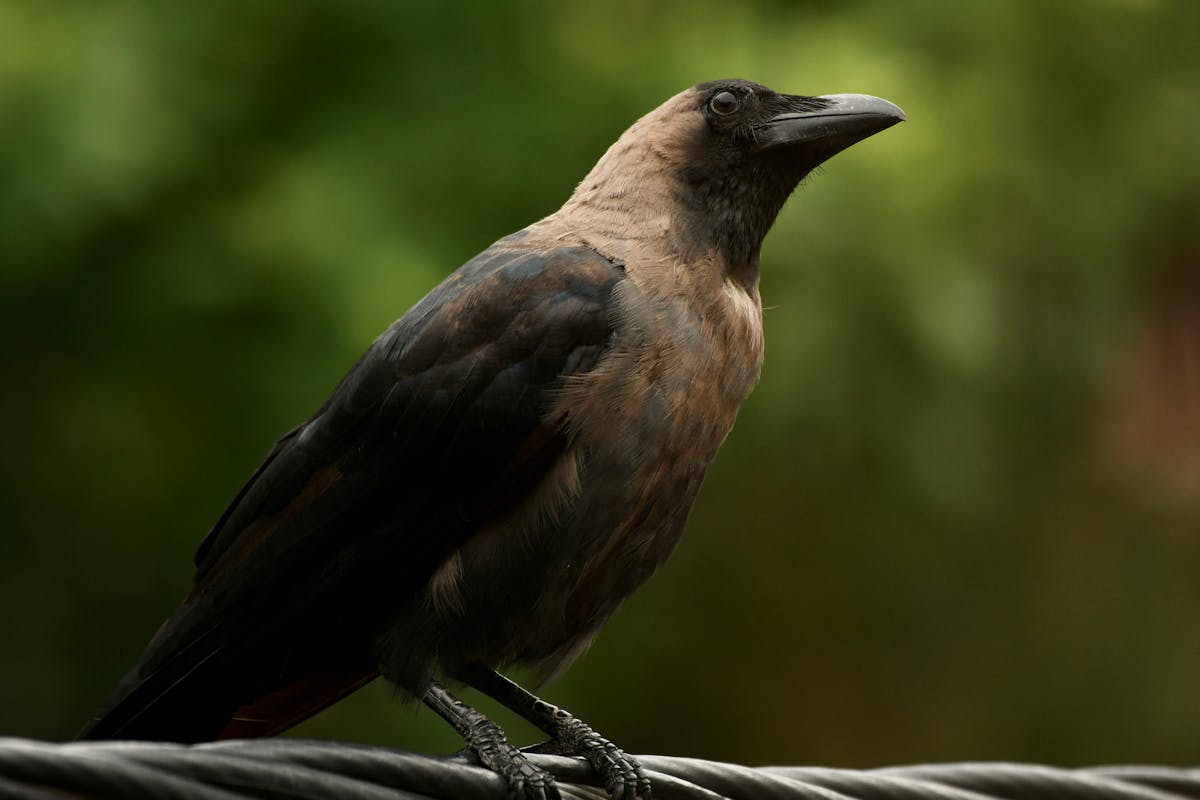
albino black crow
Is this bird an albino crow?
Leucistic Robin Sightings
“I was absolutely mesmerized when I saw an American robin with partial albinism (above) last fall. Winter passed, and I could not believe that I would see such a leucistic bird again.
I was delighted to see this bird when it arrived at my place in March!” Reader Martha Chavez says.
Is there any point in watching the robin bird?
The leucistic robin
“Once, in early spring, I let my dog out, the dog was playing outside, and I saw what looked like a flash of white. Since there are no white birds in this area of Minnesota, I decided to investigate. Upon inspection, it turned out to be a partially albino. The male robin bird that was flying. Without flying, he stuck around the area for over a week, perched on the treetops and singing his heart out. Quite an unusual sight!” Sue Moore says.

MD Imdadul Haque is the founder of BirdzFly, a research-backed resource on North American backyard birds. Drawing on years of independent study into bird identification, behavior, and migration patterns, he writes in-depth guides designed to help US birders understand the species in their own backyards — from common feeder visitors to seasonal migrants passing through.