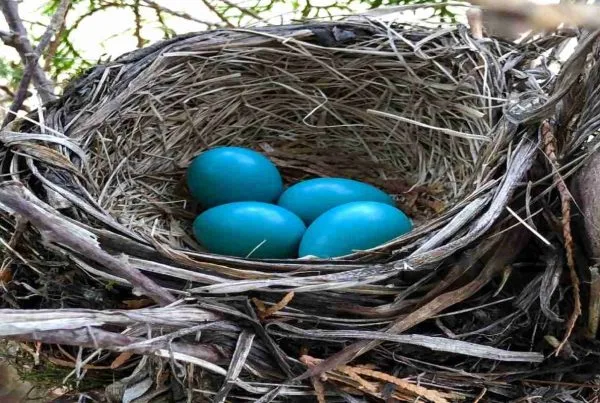


Baby Bird Eggs
A short story about finding an egg left by a baby bird, which instinctively you want to help, reminds anyone walking past a cute egg that those instincts are in our nature.
Scenario 1: You are mowing the grass one beautiful spring day, shred away in your thoughts, and you glimpse the ground and see a small white egg! First, you would want to save it — try to find the nest and carefully replace it. It is a tender but ironic tale that brings into question the role of the observer of nature and wildlife.
Therefore, this article is designed to teach you the appropriate actions to take when you find bird eggs, focusing on your knowledge of what birds do and if you might be breaking the law if you handle them. This guide will then walk you through what you need to know and what to do if you happen to find more bird eggs and how do deal with the situation properly and in accordance with the law.
The Initial Encounter
Searching for a Bird Egg: most like finding one when you’re mowing the lawn. When you find an egg on the ground you tilt your head, look for a nest, listen to the birds peeking who placed it there. These moments remind of other cases where bird life is delicate and threatened.
Personal Experience
It’s easy to feel attracted to assist particularly the experience of discovering the eggs while mowing the lawn. You could be wondering what to do about incubating the egg or making a nest. So much so that it is easily able to spark the viewers’ curiosity about species of birds and their nesting habits.
Emotional Reaction
The nature of human beings to protect weak life-form, and the first response suggests the mother feeling and also the desire to help. Make sure this energy is rooted in information. But misguided acts do more harm than good, even when well meaning.
Research And Learning
Bird behavior and ecology studies need to be done with an increasing level of scrutiny. We are not always better off just doing what you naturally feel you will do, and so what actions to take should be researched, instead of just acted on based on instincts.
Importance Of Research
More work needs to be done to identify the species, before blame is assigned. Asking something like, can this egg be fertilized, or does it have a potential to fertile? novel until I realized that, oh, the thing is a ground-nesting bird?” Having access to these credible sources has become very imperative for them.
Finding Information
As far as bird lovers are concerned, the Internet is a gold mine. Online sites such as Google and The Cornell Lab of Ornithology provide specific details about the birds, their eggs and nests. For example, Cornell’s NestWatch is very helpful for the process of identifying eggs and what to do if you nest an egg.
Why Do Eggs Fall Out of Nests?
It is always an issue of concern when bird eggs are on the ground. When trying to solve it, Before looking to solve it you need to be familiar with the reasons that are causing this.
Egg Displacement: Causes Behind The Situation
Some birds abandon their eggs or their parents are careless, so their eggs won’t hatch on the ground. So, there are lots of environmental and behavioral factors at play here.
Weather
Weather events are a common cause of energy crises. Birds need to build nests or lay eggs, and storms and high winds can destroy nests or throw eggs out, which gives us a sense of how storms and winds can displace eggs. Exposure leads to the worst damage among the birds that build nests in exposed areas of the territory.
Predators
Predation is another significant cause of egg displacement. If the function of predators like raccoons, snakes and other birds is understood, that explains why these animals expose eggs in the wrong location. These threats are part of the natural world, in some ways, even though the process can feel cruel to witnesses.
Parasitic Behavior
Other such behaviors include brood parasitism (e.g., cowbirds). Like some other species, they lay their eggs in other birds’ nests and trick the parent birds into playing babysitter. This behavior robs bluebirds (among others) of their native bird eggs that were in the nests.
Natural Nesting Locations
When birds nest (flower pots, eaves), they tend to make a home out of unique places. This behaviour increases the probability of eggs being placed in unsafes or unconducive places, places that may not even be safe for the female or stable for the eggs.
What To Do If You Discover An Egg
To try to cultivate a bird egg sounds virtuous, yet do-it-yourself attempts are ineffective. So there, rehearsed calls, under a reasonably developed plan, will help preserve the egg and, indeed, will not disturb the work of nature. Here’s how to responsibly look at it.
Stop, Look, And Listen
Because choosing the proper steps begins with pausing to think, this piece will limit itself to situations that provide a pause. If You Find a Bird Egg: The simplest and yet adequate countermeasures are Stop, Look, and Listen.
- Stop
Step 1: Resist the urge to step in right away. Even if just moving it from place to place, or doing something to it, may be harmful for, or upsetting to, the surrounding system. There is a broad ethical implication that we need to think about before doing anything, in keeping with ERG principles.
- Look
See if you can guess what type of egg, and where it might be from. Look for nearby nests, tendrils of the parent birds, or other evidence and sign, such as feathers or disturbed vegetation, of where the egg was taken from.
- Listen
Listen for audio made by parent birds in the area you are interested in watching. Any sound or movement or hub-bub nearby — chirps, movements of wings, ruffling of leaves — can be a sign the egg still belongs to a bird guarding the nest with vigilance. At times, even the rescuers who took the time to pay attention can determine if it’s right to intervene or if it would be better to let the egg be.
Identifying The Egg
If it is indeed egg leak, to decide on any action, you need to know exactly what species egg you are dealing with.
Researching The Egg Type
Identify the egg with the help of smartphone apps and websites. Google Lens, for example, or the Cornell Lab of Ornithology’s NestWatch program allows you to enter the identifying features — the egg’s size, color and location — and learn the species.
Ground Nesting Birds
Birds build their nests on the ground rather than in trees or tree-holes. For these species in particular, the ground is still a natural and safe terrain. When you see a hole in the ground, leave it alone — consumers should realize this. Eggs or young ones that are supposed to be protected end up being eaten by a predator, or the interference makes it impossible for a parent to supply the young with food.
Legal Considerations
Many birds, and bird eggs, are regulated and closely regulated by the government to protect the birds themselves, and the ecosystem. Before proceeding to take action these laws has to be understand.
Migratory Bird Treaty Act (MBTA)
The MBTA and its provisions on how bird eggs are treated are key to whether what is permissible now in the law. This, is the federal statute in the United States that protects most species of wild birds. Under law, killing, capturing or interfering with nests, eggs and chicks of birds is illegal, unless authorized.Permission is granted for restricted measures only.
Overview Of The Law
The MBTA also seeks to protect birds from exploitation and practices that could be harmful but aren’t designed to harm them. It is illegal to possess or handle bird eggs, even to repaint them or put them in a better location, without a license.
Exemptions
The MBTA does not apply to all birds: there is a List of Birds. For example, these regulations cover neither house sparrows, nor starlings, nor rock pigeons. Such species are considered to be either prohibited or undesirable, and the management of such basidiomes could be prohibited or regulated according to the legal specifications of a particular country.
Appropriate Actions To Take
Knowing what you should do when you find a bird egg will go a long way in helping to conserve it and the other organisms surrounding it.
If You Find A Viable Egg
If the egg is intact and appears fresh, the appropriate course of action is to find out where the nest is and return the egg to it, if one exists. Avoid touching the egg, and ensure that the nest is safe and in current use by the parent birds if it is to be rehomed.
Rehoming The Egg
You have to try as best you can to return the egg to its original location. Learning how to properly and gently put back the egg into the nest is to handle the egg with care and return it back into the nest if possible. Confirm that the lesser young in the nest is “sure” (in the technical sense) and has been newly preyed on by its parents.
Do Not Touch
Unfortunately there are still those that believe the urban legend that humans smell will cause birds to reject their babies. Birds do not have a strongly developed olfactory apparatus and will not abandon their eggs or young because of human contact. Still, as with most myths, it should inspire all to intervene even if handling is still frowned upon.
In The Case Of Ground Nests
Open-cup nests need to be left intact, because most birds build them on the ground. Envelop it in something that will prevent any outside force, human or animal, from approaching.
Avoid Disturbance
Pines, therefore, benefit ground-nesting birds because the egg should always remain undashed. Consider effective ways to barricade the site without disturbing the nest, such as staking and taping off the area. This helps to protect the nest from being stepped on or stepped upon by humans and pets while also allowing the parents to tend the eggs.
- What you need to do is contact wildlife rehabilitators.
If you cannot tell if an egg needs attention or if the egg requires any special treatment, the best option is to speak to experts.
Resources For Help
Urge readers to contact local wildlife rehabilitators for guidance. These professionals are trained and equipped to determine the egg’s viability and what kind of care should be provided. Most states and countries maintain lists of licensed wildlife rehabilitators on the web.
Conclusion
Though on occasion you may find an egg of a bird that makes such an extra egg, it is useful to know that many other eggs are fine to leave where you found them or don’t even require collecting. People will only be able to stop them from stubbing out their instincts by continuously interrupting their activity when they make decisions based on the expected behavior of these more conscious creatures. Refer to resources to determine species, abide by regulations established under the MBTA, and consult wildlife experts if in doubt. In doing so, she hopes that what she has been applying while working with the birds will help save them for generations to come.

MD Imdadul Haque is the founder of BirdzFly, a research-backed resource on North American backyard birds. Drawing on years of independent study into bird identification, behavior, and migration patterns, he writes in-depth guides designed to help US birders understand the species in their own backyards — from common feeder visitors to seasonal migrants passing through.