
Black-Chinned Hummingbird
With an area of distribution that extends from southern Mexico to British Columbia, black-chinned hummingbirds are easily noticeable but are often unnoticed in the face of showier western species. Let’s get to know this species better, including how to tell the difference between males and females and more about their call, preferred plants and migration habits.
How Does a Black-Chinned Hummingbird Look Like?
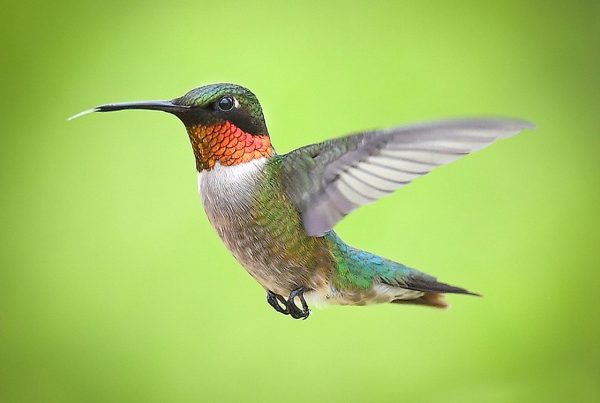
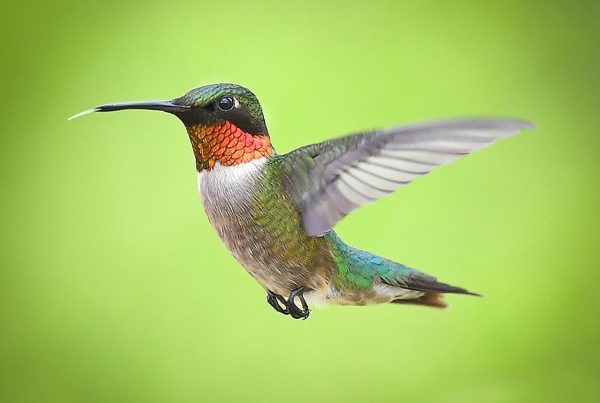
Black-chinned hummingbird male
“Black-chinneds are closely related to the ruby-throated hummingbirds of the East, and their ranges overlap in central Texas.
Black-chinneds are difficult to distinguish from Anna’s, which could be found in the same area, according to Jason Fidorra, a district wildlife biologist for the Washington Department of Fish & Wildlife. “Structure can be more informative than color,” he says. “Include the long and minutely decurved bill of black-chinned, also the overall more slender body shape and neck compared to similar species such as Anna’s and Costa’s.”
For a black-chinned, Jason says, “Search for a black throat — black from a humorless walking shoe by day into the deepest purple satin by sun’s last light — and the thinnest little strip of a deep purple gorget bow tie visible only when the light bounces just right to the viewer’s eye.”
While feeding, the black-chinned hummingbirds wag and fan their tails. They are inclined to identify a favorite spot where they can watch over their domain and they’ll go back to the same place again and again.
Black-Chinned Hummingbirds Females
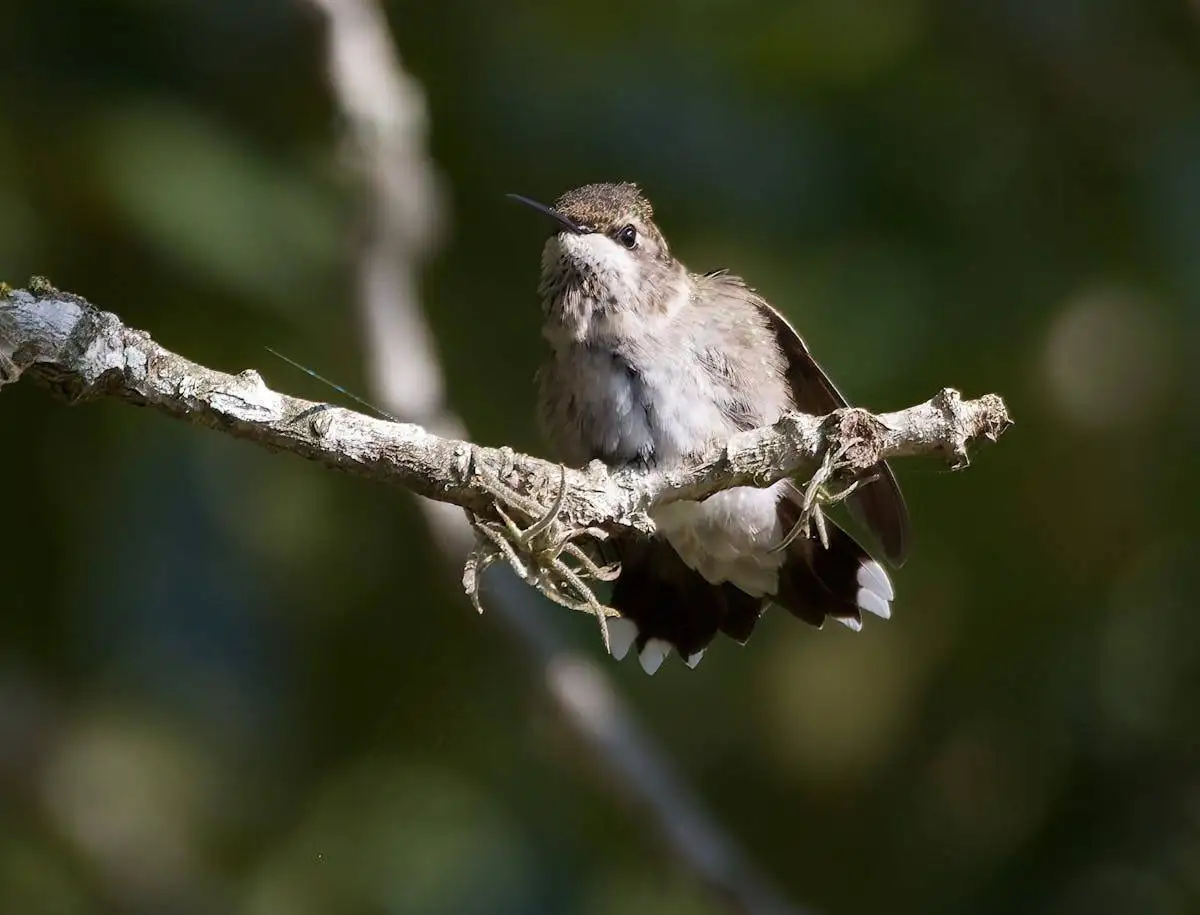
- Squee!—San Antonio, TX Black chinned hummingbird female.
Females and young of both species are similar, having a baby-blue/ pale green back, white underparts and juveniles have white tips on their flight feathers.
A reader inquired, the experts responded — and in that case, and in many others over the years, the readers have been heard. “I only seem to see female black-chinned hummingbirds at my place. Where are all the guys?” Marlys Baldwin of Garden Ridge, Texas Asks:
The birding experts Kenn and Kimberly Kaufman write: “With black-chinneds and some other hummingbirds, it sometimes seems as if the males have all vanished. This is particularly valid during and after the breeding season when all young birds are clearly not as flamboyant as adult males, but instead are so similar in appearance to adult females, well, there are simply so many of them, that it far outweighs the number of adult males.
They also favor different habitats. Males frequently sit high, for example on treetop twigs, to look out for females or rivals, leaving females staying down low in the garden and being easily seen. And because hummingbirds don’t mate for life, a male may leave the area after mating, and a female can raise the young alone.”
Range and Habitat
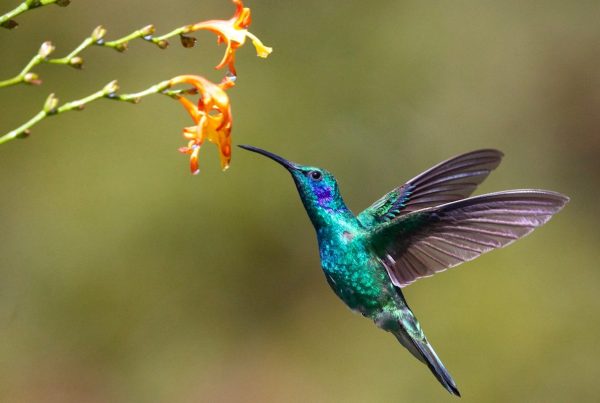
Black-chinned hummingbird on Texas thistle
“Black-chinneds are the second-most roughly distributed breeding hummingbird after our eastern US Ruby-throats, and occupy a range of habitat types comprised mostly of (inland habitats) dry scrub, riparian and oak woodlands, suburban sites where they are often regular visitors to gardens, and feeders over the range of their breeding distribution,” Jason explains.
“In summer they breed mostly in the U.S. west from the Rockies, plus in western Texas and Oklahoma,” Jason says. “They’re a familiar and significant species for many gardeners, but they are so plain for a hummingbird.”
Black-chinned Hummingbirds make two migrations each year to and from their breeding ranges. They migrate into the western United States from western Mexico, where they overwinter, in the summer.
Their migration range is coincident with, and covers most of the West from the Rockies to the Cascades and Sierras. Some birds winter on the Texas Gulf Coast.
Before migrating south, some black-chinned hummingbirds make appearances at high elevations to eat nectar flowers that are the last to bloom in late summer.
Nesting Habits
Black-chinned hummingbirds could be building nests in the ranges of Cooper’s hawks as a way of protecting them from all other predators, Tice Supplee, director of bird conservation for Audubon Southwest, said in an email.

Hummingbird & Characteristics
How To Get A Black-Chinned Hummingbird
- Black-chinned hummer - female
Black-chinneds are plentiful and adaptable, and it’s simple to coax them into staying in backyards. People who have a lot of plants and places for hummingbirds to seek cover will have them, Tice says. People, I tell them to put in a water feature and native planting.” Opt for natives for your region, like penstemons and sages that will do well across much of the West.
Tice also suggests a gently cascading water feature. “It’s perfect when the hummingbird can hover in,” she says. “Or use a saucer for potted plants and just put one of these drip irrigation emitters in that.
7 Flowers to Feed Western-Striped Hummingbirds
- Black Chinned Hummingbird Sound
- Bird audio from the Cornell Lab of Ornithology
Their song is not often heard because it is a high-pitched warbling. When they’re chasing intruders, listen for their chipping calls. The male’s swooping courtship display culminates in the bottom of the dive a trill.
About the Experts
Jason Fidorra is a district wildlife biologist with the Washington Department of Fish & Wildlife. He has worked on bird research and conservation projects throughout the United States and formerly served on the board of directors of the Washington Ornithological Society.
Vashti “Tice” Supplee is the Director of Bird Conservation for Audubon Southwest. She has experience in research, habitat development and management, urban wildlife and game management during her career. At Audubon, she plans science-based work with the National Audubon Society and co-manages the Arizona Important Bird Areas program.

MD Imdadul Haque is the founder of BirdzFly, a research-backed resource on North American backyard birds. Drawing on years of independent study into bird identification, behavior, and migration patterns, he writes in-depth guides designed to help US birders understand the species in their own backyards — from common feeder visitors to seasonal migrants passing through.