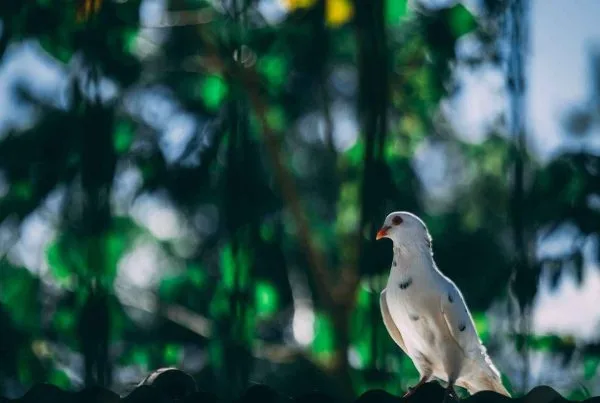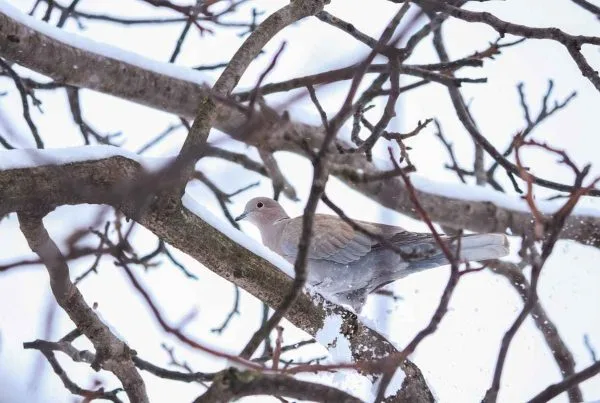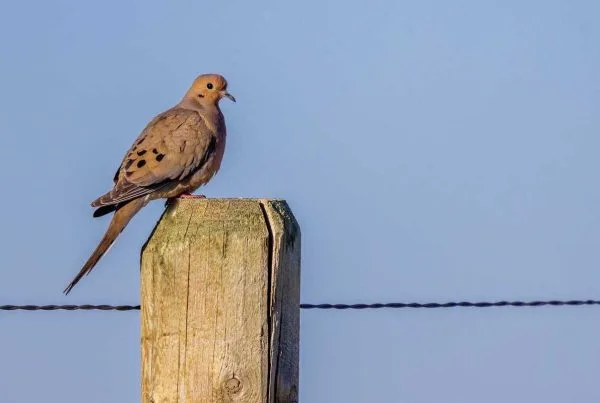

The mourning dove has one of the most recognizable calls in North America — a low, soft cooing that most people describe as mournful or sad. That sound is where the name comes from. And that sound, more than anything else, is probably why the mourning dove has accumulated so much symbolic weight over centuries. It sounds like grief. It sounds like longing. People respond to it instinctively.
But the symbolism of the mourning dove is not mainly about sadness. It is mostly about peace, love, and the presence of those who have died. Across Christian tradition, Native American cultures, and general folk belief, the mourning dove is one of the most consistently positive bird omens you can encounter.
Here is what the mourning dove actually symbolizes — broken down by tradition, context, and the specific situations people ask about most.
What Does a Mourning Dove Symbolize?
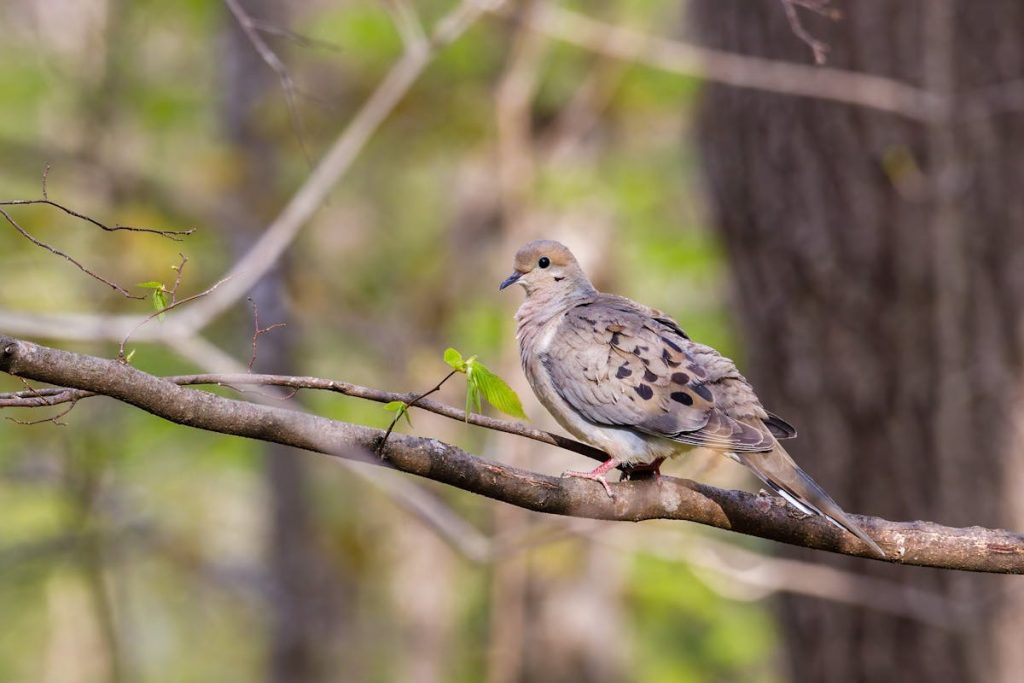
The mourning dove’s core symbolic meanings are peace, love, hope, and the gentle presence of those who have passed. These meanings appear across almost every tradition that has an opinion about doves — they are unusually consistent for a single bird.
The main symbolic associations are:
- Peace — The dove has represented peace since ancient times, appearing in artwork, scripture, and political symbolism across thousands of years
- Love and partnership — Mourning doves mate for life and are rarely seen alone. Their loyalty made them a symbol of faithful, enduring love
- Hope — In Genesis, a dove returned to Noah with an olive branch after the flood, signaling that the worst had passed. That image became one of the most powerful hope symbols in Western culture
- Messages from the dead — Across many folk traditions, a mourning dove appearing after a loss is interpreted as a sign from the person who died, indicating they are at peace
- The Holy Spirit — In Christian tradition, the white dove specifically represents the Holy Spirit. The mourning dove, as a dove, carries this sacred association
- Transition and new beginnings — Despite its name, the mourning dove is often associated with moving forward through grief, not being consumed by it
Mourning Dove Spiritual Meaning
Spiritually, the mourning dove is a messenger. That is the consistent thread across traditions — the bird arrives with something to communicate, usually something comforting.
In Christian spirituality, the dove has represented divine communication since the story of Noah. When the dove returned with an olive leaf, it was not just announcing that land had appeared — it was communicating that God’s wrath had ended and peace was restored. That story embedded the dove permanently as a symbol of divine communication and peace in Western religious culture.
In a more personal spiritual context, many people interpret a mourning dove’s visit as a message from a loved one who has died, from God, or from a guardian angel. The specific message is almost always the same: things are going to be okay. You are not alone. There is peace on the other side.
The mourning dove’s call adds to this interpretation. It sounds like grief — but it is also persistent, consistent, and ultimately calm. People who sit with the sound often describe feeling comforted rather than saddened by it. That paradox is at the heart of the mourning dove’s spiritual meaning: it acknowledges loss while also pointing toward peace.
What Does It Mean When a Mourning Dove Visits You?
The meaning of a mourning dove visit depends on your situation. Here are the most common contexts:
A Mourning Dove Visiting After a Loss
This is the most commonly reported experience. Someone loses a loved one, and then a mourning dove appears — on a porch railing, outside a window, unusually close and unusually calm. The person feels the bird carries a message from the person who died.
This experience is extremely common and not limited to people who consider themselves spiritual. Something about the dove — its gentleness, its stillness, its soft call — triggers a feeling of connection that is hard to explain away. The tradition says to be still, receive the visit, and take it as a sign that the person you lost is at peace.
A Mourning Dove Visiting Your Garden or Yard
A mourning dove choosing your yard as a regular stop is generally considered a positive sign — peace and calm are present in your space, or are coming. In folk tradition, a dove near your home means the household is protected and that love surrounds the people inside.
Hearing a Mourning Dove
Hearing a mourning dove without seeing it is also considered meaningful. The call itself is the message. Most traditions interpret it as a reminder to slow down, find peace in the present moment, and release whatever grief or anxiety you are carrying. Some people describe hearing a mourning dove during a difficult period and feeling an immediate sense of calm — as if the bird called specifically for them.
Two Mourning Doves Together
Seeing two mourning doves together amplifies the love symbolism. Mourning doves are monogamous and often appear in pairs, so two doves together is a direct image of faithful partnership. It is interpreted as a blessing on a relationship, a sign that love will endure, or a message about the unity of two people who are separated by death but still connected.
In some traditions, two doves together after a loss represent the reunion of the person who died with someone who preceded them — a husband and wife together again, or a parent reunited with a child.
A Mourning Dove at Your Window
A dove at your window, especially one that lingers or keeps returning, is typically interpreted as a message that needs your attention. Unlike a robin tapping on glass (which is usually territorial behavior), a dove sitting quietly at a window is calm and deliberate. Most people who experience this describe it as a visitation — a moment of communication rather than accident.
Mourning Dove Symbolism in Different Traditions
Christian Symbolism
The dove appears more times in Christian scripture than almost any other bird. The most significant appearances are the dove returning to Noah with an olive branch in Genesis, and the Holy Spirit descending in the form of a dove at Jesus’s baptism in the Jordan River. These two stories established the dove permanently as a symbol of peace, divine presence, and new beginnings in Christian tradition.
In the Old Testament, doves were also used as offerings — they were the offering of the poor, which made them a symbol of humility and accessible worship. The Song of Solomon uses the dove as a term of endearment, connecting it to love and beauty.
In practice, many Christians interpret a mourning dove sighting as a sign of the Holy Spirit’s presence or as a message of comfort from God during difficult times.
Native American Mourning Dove Symbolism
In many Native American traditions, the mourning dove is associated with love, gentleness, and the spirits of the dead. The Blackfoot people saw the dove as a symbol of safety and protection. The Cherokee connected the dove’s call to the spirit world — the mournful sound was interpreted as communication from those who had passed.
Several Plains tribes associated the mourning dove with home and family. Because the dove mates for life and stays close to its nesting area, it represented the values of loyalty, constancy, and the sacredness of home.
General Folk Belief
Outside specific religious or cultural traditions, the mourning dove carries consistent positive associations in folk belief across North America and Europe. A dove near your home means peace inside it. A dove at a wedding or new home is a blessing. A dove after a death is a sign the person is at peace. These beliefs show up in different regions independently, which suggests they emerge from the bird’s own qualities — its gentleness, its call, its tendency to appear calm and unafraid around people — rather than being passed from one tradition to another.
Mourning Dove as a Spirit Animal or Totem
If the mourning dove is your spirit animal, the core quality it represents is peace — not the absence of difficulty, but the ability to stay calm through it. People who identify with the mourning dove tend to be gentle, patient, and oriented toward home and family. They are not aggressive in how they move through the world, but they are persistent.
The mourning dove totem also carries a strong association with grief that has been processed rather than suppressed. The dove does not deny the sadness in its call — that sound is real. But it keeps calling. It keeps showing up. That is the mourning dove’s lesson: acknowledge the loss, feel it fully, and then keep going.
In dreams, a mourning dove typically signals peace, a message from someone who has died, or a transition that is underway. A dove landing on you in a dream is almost universally interpreted as a direct blessing or communication. A dove flying away may signal that a period of difficulty is ending and moving on.
Mourning Dove Omen: Good or Bad?
Almost universally good. The mourning dove is one of the most consistently positive bird omens across traditions. Even in situations where other birds might carry warnings — a bird at the window, a bird entering the house — the dove typically retains its peaceful interpretation.
The main exception in some older European traditions is that a dove cooing persistently near a house was occasionally interpreted as a sign of coming rain or bad weather. But this is a minor and rare association. The overwhelming weight of mourning dove symbolism across every major tradition is positive.
Mourning Dove in Winter
Unlike many birds, mourning doves do not migrate long distances. They tend to stay year-round in much of their range or make short seasonal movements. Seeing a mourning dove in winter carries the same meaning as seeing one in any other season — but the winter context adds something.
A mourning dove present in the cold months, when the landscape is bare and most birds are gone, becomes a more striking symbol of hope and persistence. The same qualities that made the robin a winter symbol of hope apply here: the bird stays when other birds leave, and its presence in a bare winter garden feels like a deliberate reminder that warmth and life continue.
Mourning Dove vs. Turtle Dove
People sometimes confuse mourning doves and turtle doves, partly because the word “turtle dove” appears in the Christmas song “The Twelve Days of Christmas.” They are different birds. The turtle dove (Streptopelia turtur) is a European species; the mourning dove (Zenaida macroura) is the common North American species.
Symbolically, they carry overlapping meanings — both are associated with love, peace, and faithfulness — but the turtle dove has a stronger association specifically with romantic love and devotion in European literary tradition, while the mourning dove carries a broader range of spiritual meanings in American folk tradition.
FAQ: Mourning Dove Symbolism
What does it mean when a mourning dove visits you?
In folk and spiritual tradition, a mourning dove visiting you — especially after a loss — is interpreted as a sign from a loved one who has passed, indicating they are at peace. More broadly, a dove visit is a sign of peace, love, and comfort surrounding you.
What does the mourning dove symbolize spiritually?
Peace, hope, divine presence, and the gentle communication of those who have died. The mourning dove is one of the most consistently positive spiritual symbols across Christian, Native American, and general folk traditions.
What does it mean when two mourning doves visit together?
Two mourning doves together amplify the love symbolism. They are interpreted as a blessing on a relationship, a sign of faithful love, or a representation of two loved ones reunited on the other side.
Is a mourning dove a good omen?
Yes, almost always. Across virtually every tradition that has an opinion on doves, their appearance is positive — peace is present or coming, someone who has passed is at peace, or a difficult period is ending.
What does hearing a mourning dove mean?
Hearing a mourning dove’s call is interpreted as a message to slow down and find peace. Many people describe an immediate calming effect when they hear the dove’s call during stressful periods — as if the sound itself carries the message.
What does a mourning dove symbolize in the Bible?
The dove in the Bible represents peace (Noah’s dove with the olive branch), the Holy Spirit (at Jesus’s baptism), and humility (doves as offerings). A mourning dove sighting is often interpreted by Christians as the presence of the Holy Spirit or a message of comfort from God.
For more on birds and their spiritual meanings, see our guides on robin symbolism and what it means when a bird hits your window. For the mourning dove’s biology and behavior, our mourning dove wildlife guide covers nesting, diet, and range.

MD Imdadul Haque is the founder of BirdzFly, a research-backed resource on North American backyard birds. Drawing on years of independent study into bird identification, behavior, and migration patterns, he writes in-depth guides designed to help US birders understand the species in their own backyards — from common feeder visitors to seasonal migrants passing through.