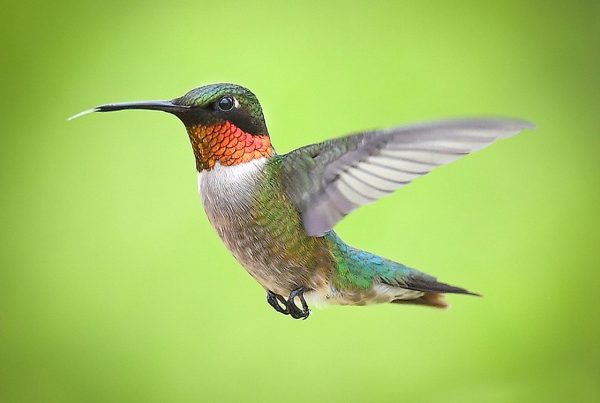
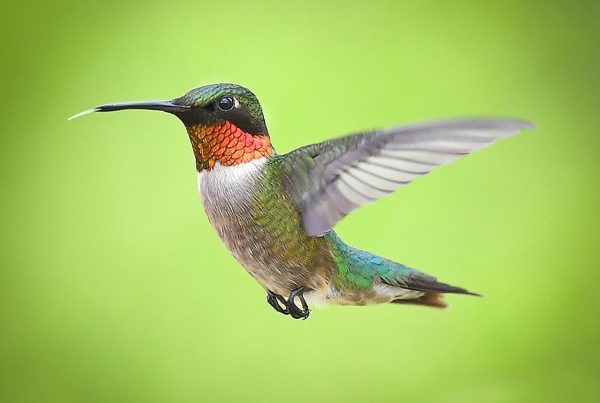
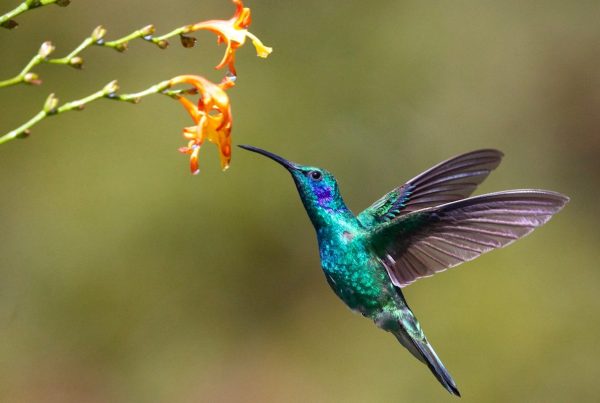
Hummingbird moths (Hemaris species) are easy to mistake for actual hummingbirds in flight — both hover at flowers using rapid wingbeats and feed through a long proboscis. The size difference is the fastest way to tell them apart once you know what to look for.
Adult Size
Hummingbird moths measure 1.5 to 2.5 inches in wingspan — noticeably smaller than the Ruby-throated Hummingbird, which reaches up to 4 inches including the body and wingspan combined. The moth’s body is plumper and more compact than a hummingbird’s sleek, feathered form, and its wings, after the first flight, lose their scales and become transparent — a feature actual hummingbirds never have.
The Caterpillar Stage
Hummingbird moth caterpillars are commonly called hornworms, due to a small projecting horn at the rear of the body. Coloring varies by species and individual — green, yellow, or brown, often with diagonal side stripes. They can grow to about 2 inches before pupating.
Caterpillars feed on a specific set of host plants — honeysuckle, snowberry, hawthorn, cherry, and plum, depending on the species. They do not feed on garden vegetables, which separates them from the visually similar tomato and tobacco hornworms that damage tomato and pepper plants.
After feeding through summer, caterpillars overwinter as pupae in leaf litter or loose soil near the host plant, emerging as adult moths the following spring.
Why Adults Matter as Pollinators
As adults, hummingbird moths are effective pollinators of tubular flowers that are harder for bees to access — their long proboscis reaches deep into blooms like bee balm, phlox, and honeysuckle that have narrow corollas. Because they’re active during the day (unlike most moths), they fill a pollination niche that overlaps with butterflies and hummingbirds rather than competing with nocturnal moth species.
How to Support Hummingbird Moths
- Plant native nectar sources — bee balm, phlox, butterfly bush, and honeysuckle
- Leave host plants like honeysuckle and snowberry in place for caterpillars
- Avoid pesticides, which kill both the pollinating adults and the caterpillars
- Leave some leaf litter undisturbed over winter, where pupae overwinter
FAQ: Hummingbird Moth Size
How big is a hummingbird moth compared to a real hummingbird?
Hummingbird moths have a wingspan of 1.5–2.5 inches, noticeably smaller than the 3–4 inch overall length of a Ruby-throated Hummingbird.
What does a hummingbird moth caterpillar look like?
A hornworm-type caterpillar, up to 2 inches long, usually green or brown with diagonal stripes and a small rear horn. It feeds only on honeysuckle, snowberry, and related plants — not garden vegetables.
For more on these insects, see our guides on whether hummingbird moths are good for your garden and hummingbird moth vs hawk moth identification.

MD Imdadul Haque is the founder of BirdzFly, a research-backed resource on North American backyard birds. Drawing on years of independent study into bird identification, behavior, and migration patterns, he writes in-depth guides designed to help US birders understand the species in their own backyards — from common feeder visitors to seasonal migrants passing through.