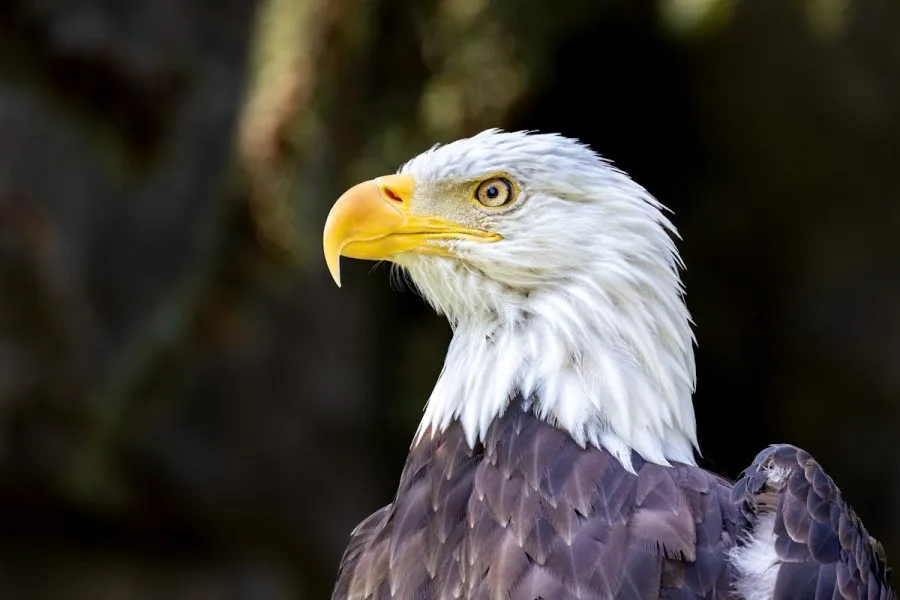

Bald eagles live 20–30 years in the wild. That is the direct answer. The oldest documented wild bald eagle lived to at least 38 years. In captivity, where they face no predators and receive consistent food, some have lived past 50.
Here is the full picture of bald eagle lifespan — by age class, what threatens it, and how the species went from near extinction to 316,000 birds in 50 years.
Bald Eagle Lifespan in the Wild
The typical lifespan range is 20–30 years for adults that successfully establish territories and survive their vulnerable juvenile years. Most wild bald eagles that die do so in their first two years of life — before they develop the hunting efficiency and experience needed to reliably feed themselves.
Once a bald eagle reaches adulthood and holds a territory, its annual survival rate is high — around 90–95% per year in healthy populations. That survival rate compounds significantly over a lifetime.
Bald Eagle Lifespan by Age Class
| Age Class | Age Range | Key Characteristics |
|---|---|---|
| Eaglet | 0–3 months | In nest, fully dependent on parents |
| Fledgling | 3–6 months | Learning to fly and hunt, still near parents |
| Juvenile | 6 months–2 years | Dark brown throughout, highest mortality period |
| Sub-adult | 2–4 years | Transitional plumage, developing hunting skills |
| Adult | 5+ years | White head and tail appear, breeding capable |
| Established adult | 10–30 years | Territory holder, typical lifespan range |
When Do Bald Eagles Get Their White Head?
The distinctive white head and tail don’t appear until the eagle is 4–5 years old. Before then, bald eagles are dark brown throughout — which is why juvenile bald eagles are so commonly misidentified as other species, particularly Golden Eagles.
The plumage changes gradually. A 2-year-old bird has mottled brown and white throughout. A 3-year-old has more white appearing on the belly and face. By year 4 or 5, the classic adult pattern is complete.
This means every bald eagle you see with a brown head is a young bird — either a juvenile or sub-adult still developing into adult plumage.
Causes of Bald Eagle Death
The main causes of death in wild bald eagles:
- Starvation in juveniles — Young eagles haven’t developed the fishing and hunting efficiency of adults. Many die in their first winter when food is scarce and competition is high.
- Lead poisoning — The leading cause of death in adult bald eagles. Eagles scavenge gut piles and carcasses left by hunters. If the animal was shot with lead ammunition, fragments remain in the carcass. Eagles ingest these fragments and accumulate lead in their systems. This is now documented as the primary mortality cause in many populations.
- Electrocution — Eagles perch on power poles. Older pole designs allow eagles to touch two lines simultaneously, causing electrocution. Updated pole designs have significantly reduced this.
- Collisions — With vehicles and wind turbines. Eagles flying low over roads are struck by cars; those in wind energy areas are killed by turbine blades.
- Shooting — Illegal but still occurs. The Bald and Golden Eagle Protection Act makes it a federal crime, with penalties up to $100,000 and one year in prison for a first offense.
Bald Eagle Population: From Near Extinction to 316,000
In 1963, only 417 nesting pairs of bald eagles remained in the lower 48 states. The causes were clear: DDT pesticide thinning eggshells until they broke during incubation, habitat loss, and decades of legal shooting when eagles were considered threats to livestock.
The recovery is one of conservation’s genuine success stories:
- 1940 — Bald Eagle Protection Act passed; killing eagles made illegal
- 1963 — Population bottoms out at 417 nesting pairs
- 1972 — DDT banned in the United States
- 1978 — Listed as endangered under the Endangered Species Act in most of the lower 48
- 1995 — Downlisted from endangered to threatened
- 2007 — Removed from the threatened and endangered species list
- 2021 — Population estimated at 316,700 eagles, including 71,467 breeding pairs
From 417 nesting pairs to 71,467 in roughly 60 years. The bald eagle is one of the few large predators to be brought back from the edge of extinction within living memory.
Bald Eagle Nesting and Reproduction
Bald eagles typically begin breeding at 4–5 years old. They mate for life — or more precisely, they mate with the same partner until one dies, at which point the survivor finds a new mate. Pair bonds are maintained through nest building and courtship displays each breeding season.
Clutch size is typically 1–3 eggs, laid once per year. Incubation takes about 35 days. Both parents incubate. Eaglets fledge at approximately 10–13 weeks and become independent roughly a month after that — though they often remain loosely associated with the nesting area through their first year.
Nests are reused and added to year after year. The largest recorded bald eagle nest was 9.5 feet across, 20 feet deep, and weighed nearly 3 tons — the result of decades of additions by the same pair.
FAQ: Bald Eagle Lifespan
How long do bald eagles live in the wild?
20–30 years typically. The oldest documented wild bald eagle was at least 38 years old. Captive birds have lived past 50.
What is the main cause of death in bald eagles?
Lead poisoning from ingesting fragments in scavenged carcasses is the leading cause of death in adult bald eagles. Juvenile starvation is the main cause of death in young birds.
When do bald eagles get their white head?
At 4–5 years old. Before that, bald eagles are dark brown — frequently misidentified as Golden Eagles.
How many bald eagles are there?
As of 2021, approximately 316,700 bald eagles in the lower 48 states, including 71,467 breeding pairs. The population has recovered dramatically since the 1963 low of 417 nesting pairs.
For the full picture on bald eagles, see our guides on bald eagle life cycle from egg to adult, golden eagle feathers, and identifying juvenile red-tailed hawks.

MD Imdadul Haque is the founder of BirdzFly, a research-backed resource on North American backyard birds. Drawing on years of independent study into bird identification, behavior, and migration patterns, he writes in-depth guides designed to help US birders understand the species in their own backyards — from common feeder visitors to seasonal migrants passing through.