The Northern Mockingbird is one of the most vocal and adaptable songbirds in North America — capable of learning up to 200 different songs over its lifetime by mimicking other birds, and even imitating non-bird sounds like car alarms and barking dogs.
Identification
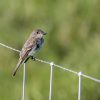
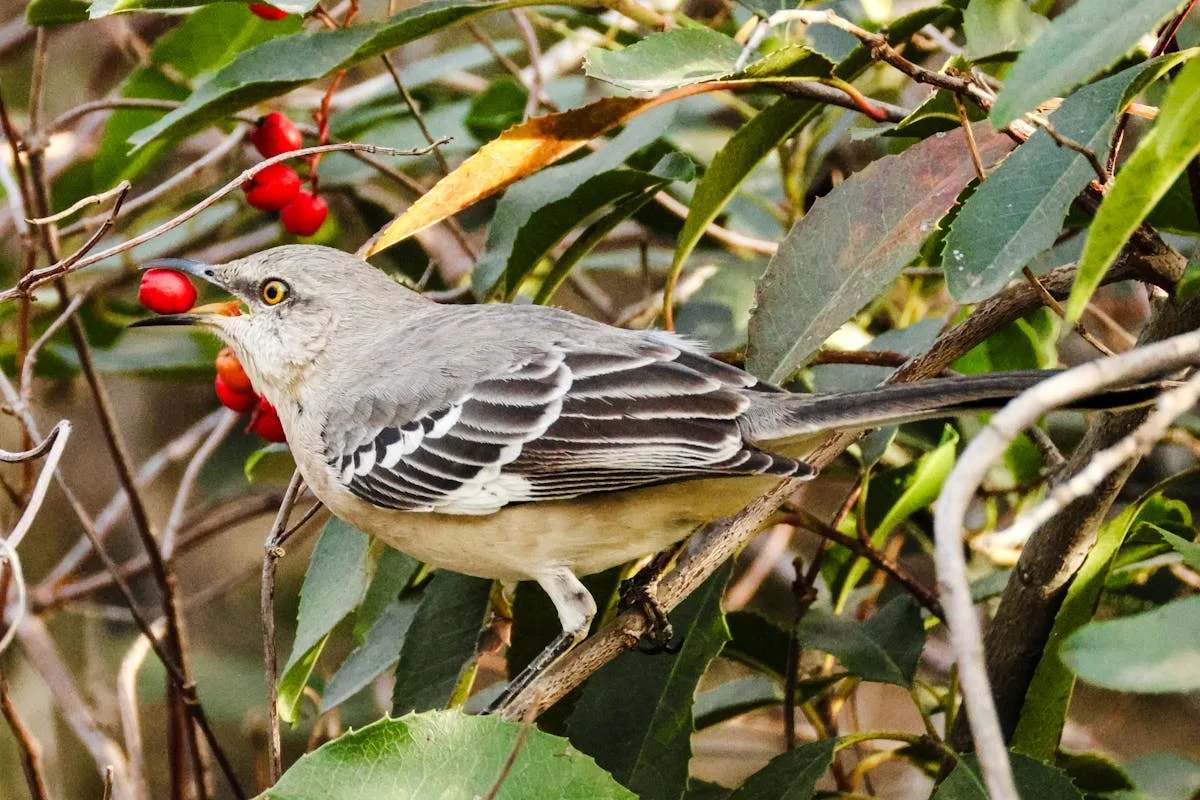
Slim, gray-brown bird with a long tail, often seen perched conspicuously on high shrubs, fence posts, or utility lines. In flight, white wing patches flash distinctively — a key field mark that separates it from similar gray songbirds at a distance.
The Mimicry
Mockingbirds are named for their habit of mimicking the calls of other bird species, sometimes stringing together dozens of different imitations in a single extended song. A male can build a repertoire of around 200 distinct songs over its lifetime, continuously adding new sounds learned from other birds in the area.
Singing follows a clear seasonal pattern: most active from February through August, tapering off in September, then returning briefly in early to mid-fall as birds establish winter territories. Males often maintain two distinct seasonal song sets — one for spring breeding season, another for fall territorial defense. Unpaired males are also well known for singing through the night, especially during a full moon, which is the most common reason people hear a “mockingbird” singing at 2 AM.
The Wing-Flash Display
Mockingbirds perform a distinctive “wing flash” — suddenly opening their wings partway to reveal the white patches while foraging on the ground. The exact purpose isn’t fully settled, but the leading theory is that it startles hidden insects into moving, making them easier to spot and catch.
Range and Habitat
Common year-round across the southern and eastern US, with range extending into the northern states and parts of the West. Highly adaptable to suburban and urban environments — parks, gardens, and roadside shrubs all support mockingbird populations as well as open woodland does.
Lifespan
The oldest documented wild Northern Mockingbird, recorded in Texas, lived at least 14 years and 10 months — notably long for a bird this size.
FAQ: Northern Mockingbird
Why do mockingbirds sing at night?
Usually unpaired males, especially during a full moon. Nighttime singing is most common in spring and is thought to relate to mate attraction.
How many songs can a mockingbird learn?
Around 200 over a lifetime, continuously adding new imitations learned from other birds and environmental sounds.
Why does a mockingbird flash its wings while walking?
Most likely to startle insects into moving, making them easier to spot and catch — though the behavior isn’t fully understood.
For more backyard bird identification, see our guide on the Northern Mockingbird overview.

MD Imdadul Haque is the founder of BirdzFly, a research-backed resource on North American backyard birds. Drawing on years of independent study into bird identification, behavior, and migration patterns, he writes in-depth guides designed to help US birders understand the species in their own backyards — from common feeder visitors to seasonal migrants passing through.